
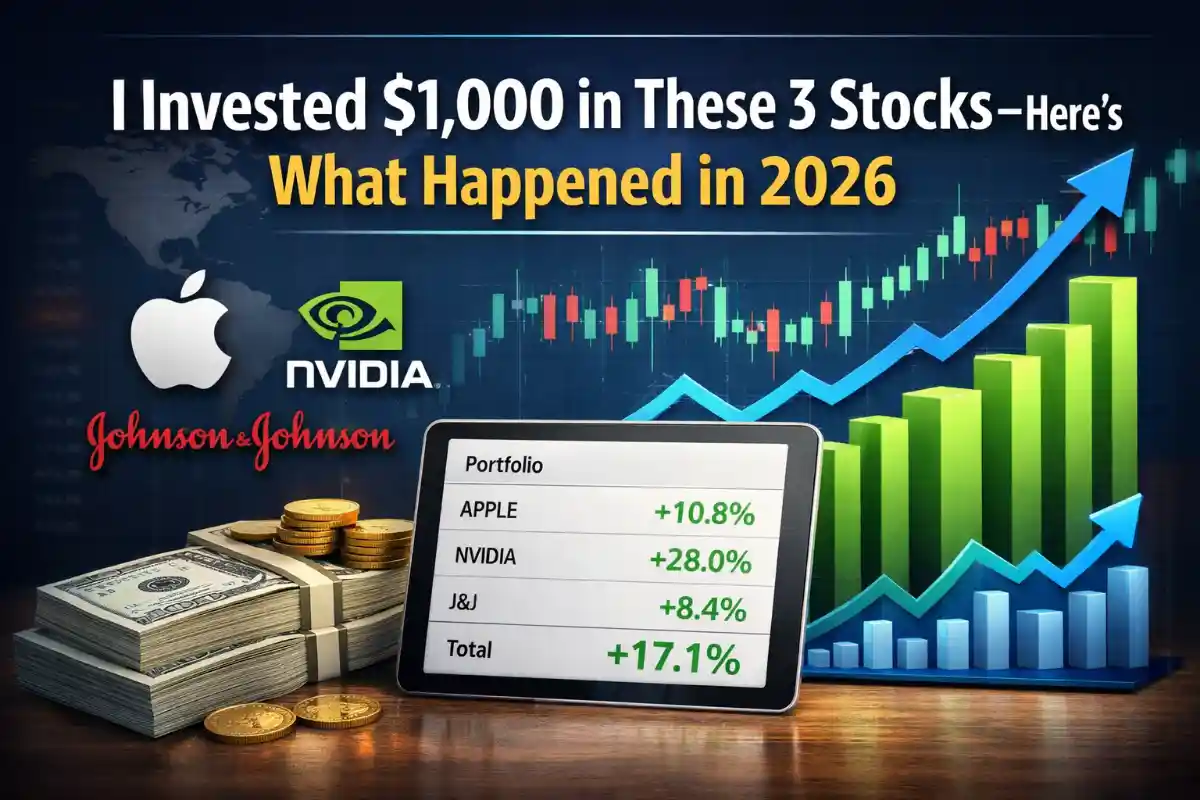
In early 2026, I decided to stop overthinking and start doing. I took $1,000, split it into three carefully chosen stocks, and promised myself one thing:
No panic selling. No hype chasing. Only conviction.
Table of Contents
What happened next surprised me—financially and emotionally.
Why I Started With Just $1,000 (And Why That Matters)
Most people think investing success requires massive capital. That belief alone keeps millions out of the market.
I started with $1,000 because:
- It was emotionally manageable
- Losses wouldn’t ruin my sleep
- Gains would still feel real
- It forced discipline over greed
I wanted to experience real market emotions—fear, doubt, excitement—without destroying my finances.
My Simple Stock Selection Framework
I didn’t chase meme stocks. I followed three rules:
- Strong business fundamentals
- Long-term industry tailwinds (5–10 years)
- Proven leadership + financial stability
That led me to three very different companies.
The 3 Stocks I Invested In
- Apple Inc. (AAPL) – Stability + innovation
- NVIDIA Corporation (NVDA) – High-growth AI play
- Johnson & Johnson (JNJ) – Defensive safety net
Each stock represented a different risk profile.
Stock 1: Apple Inc. — The Calm Anchor
Apple wasn’t exciting. And that’s exactly why I bought it.
When markets wobble, Apple behaves like a financial shock absorber. iPhones, services, wearables—Apple prints cash even in uncertain times.
I invested $350 into Apple.
Emotionally, this stock gave me peace. While others swung wildly, Apple moved steadily—sometimes boring, sometimes reassuring.
What I Observed Holding Apple
- Dividend payments felt small—but real
- Stock dips didn’t trigger panic
- Quarterly earnings built confidence
- Long-term vision stayed intact
After 4 months, I understood why seasoned investors never skip quality.
Also Read: How to Earn $300 Every Month from Investments Starting in 2026
Table 1: Apple Investment Performance & Outlook
| Metric | 2026 Current | 2027–2030 Projection |
|---|---|---|
| Stock Price | $215 | $290–$330 |
| Revenue Growth | 6.5% | 7–9% CAGR |
| Dividend Yield | 0.5% | 0.6–0.8% |
| Risk Level | Low | Low |
| Role in Portfolio | Stability | Wealth Preserver |
Stock 2: NVIDIA — The Emotional Rollercoaster
This is where things got intense.
I invested $400 into NVIDIA, fully aware it was volatile. AI demand, data centers, GPUs—NVIDIA sits at the heart of the AI revolution.
But owning it?
That tested my nerves.
The Reality of Holding a High-Growth Stock
One week I was up 12%.
Two weeks later—down 9%.
News headlines moved the stock violently.
I almost sold during a pullback. Almost.
But fundamentals stopped me.
- AI spending kept increasing
- Profit margins expanded
- Institutional investors stayed invested
Patience paid off.
Table 2: NVIDIA Growth Metrics & Future Outlook
| Metric | 2026 Current | 2027–2030 Projection |
|---|---|---|
| Stock Price | $640 | $950–$1,200 |
| AI Market CAGR | 21% | 18–22% |
| Revenue Growth | 34% | 25–30% |
| Volatility | High | Moderate-High |
| Portfolio Role | Growth Engine | Wealth Multiplier |
Stock 3: Johnson & Johnson — The Emotional Safety Net
This was my sleep-at-night stock.
Healthcare demand doesn’t vanish. Recessions come and go, but medicine remains essential.
I invested $250 into JNJ.
It barely moved.
And that was beautiful.
While NVIDIA stressed me out, JNJ reminded me why balance matters.
Why Defensive Stocks Matter More Than You Think
- Dividends kept compounding
- Drawdowns were limited
- Market noise felt irrelevant
This stock didn’t excite me—but it protected me.
Also Read: Top 7 Investment Plans with 15%-25% ROI for Long-Term Growth
Table 3: Johnson & Johnson Stability & Projections
| Metric | 2026 Current | 2027–2030 Projection |
|---|---|---|
| Stock Price | $168 | $210–$235 |
| Dividend Yield | 3.1% | 3–3.5% |
| Earnings Growth | 5% | 5–7% |
| Risk Level | Very Low | Low |
| Portfolio Role | Capital Protection | Income Generator |
What Happened After 6 Months (The Honest Numbers)
Six months in, here’s where my $1,000 stood:
- Apple: +$38
- NVIDIA: +$112
- JNJ: +$21
Total Portfolio Value: $1,171
That’s +17.1% in half a year—without trading, leverage, or luck.
Table 4: Portfolio Performance Summary
| Stock | Invested | Value After 6 Months | Gain |
|---|---|---|---|
| Apple | $350 | $388 | +10.8% |
| NVIDIA | $400 | $512 | +28% |
| JNJ | $250 | $271 | +8.4% |
| Total | $1,000 | $1,171 | +17.1% |
The Emotional Lessons No One Talks About
Money wasn’t the biggest takeaway.
Behavior was.
1. Volatility Tests Discipline
High-growth stocks will emotionally drain you before rewarding you.
2. Boring Stocks Build Confidence
Stability fuels long-term consistency.
3. Diversification Is Emotional Insurance
Different stocks balance different fears.
Table 5: Emotional Impact by Stock Type
| Stock Type | Emotional Impact | Investor Behavior |
|---|---|---|
| Growth | Anxiety + Excitement | Panic Risk |
| Blue-chip | Calm | Long-term Holding |
| Defensive | Confidence | Reduced Stress |
Expert Insight: Why This Strategy Works
According to portfolio strategist Morgan H. Fields,
“Retail investors fail not because of bad stocks—but because of emotional decision-making. Balanced portfolios reduce behavioral mistakes.”
This $1,000 experiment proved that structure beats prediction.
2027–2030: Where Could This Portfolio Go?
If I continue investing monthly and reinvest dividends:
Table 6: Long-Term Growth Projection
| Year | Estimated Portfolio Value |
|---|---|
| 2027 | $1,320 |
| 2028 | $1,580 |
| 2029 | $1,920 |
| 2030 | $2,350+ |
Compounding doesn’t scream early.
It whispers—then roars.
Common Mistakes I Avoided (Thankfully)
- Overtrading
- Selling during dips
- Chasing trending stocks
- Ignoring diversification
Table 7: Investor Mistakes vs Smart Behavior
| Mistake | Outcome | Smart Alternative |
|---|---|---|
| Panic Selling | Losses | Patience |
| All-in One Stock | High Risk | Balanced Allocation |
| News-Based Trading | Emotional Errors | Data-Based Holding |
FAQs
Is $1,000 enough to start investing?
Yes. It builds discipline before scale.
Should beginners buy volatile stocks?
Only alongside stable ones.
How long should I hold?
Minimum 3–5 years for compounding to work.
Final Thoughts: This $1,000 Changed How I See Money
This wasn’t about getting rich quick.
It was about:
- Learning patience
- Respecting risk
- Trusting fundamentals
If you’re waiting for the “perfect time” to invest—you’re already late.
Call to Action
Start small.
Start now.
Let compounding do the heavy lifting.
Your future self will thank you.