
A Dream That Feels Impossible… Until the Math Speaks
At some point, every middle-class Indian silently thinks:
“₹5 crore… that’s for industrialists, startup founders, or lottery winners — not people like me.”
But here’s the uncomfortable truth:
₹5 crore isn’t a dream problem. It’s a discipline + math problem.
When Investography’s Shweta Jain recently broke down the numbers behind a ₹5 crore corpus in 10 years, something clicked for thousands of investors. Not because she promised shortcuts — but because she didn’t.
Table of Contents
She spoke about:
- Life-stage based investing
- Risk appetite (not Instagram risk appetite)
- Time-adjusted SIP math
- And most importantly — why most people fail even with good returns
Why “₹5 Crore in 10 Years” Is a Dangerous Question
Before asking how, Shweta Jain insists on asking why.
Most investors approach wealth like this:
“Tell me the fund. Tell me the return. I’ll manage the rest.”
That mindset destroys portfolios.
Because ₹5 crore could mean:
- Early retirement at 45
- Financial freedom with passive income
- Children’s education + legacy wealth
- Or just ego validation
Each goal needs a completely different portfolio.
The Real Mistake People Make
They chase returns first, and purpose later.
And markets punish that.
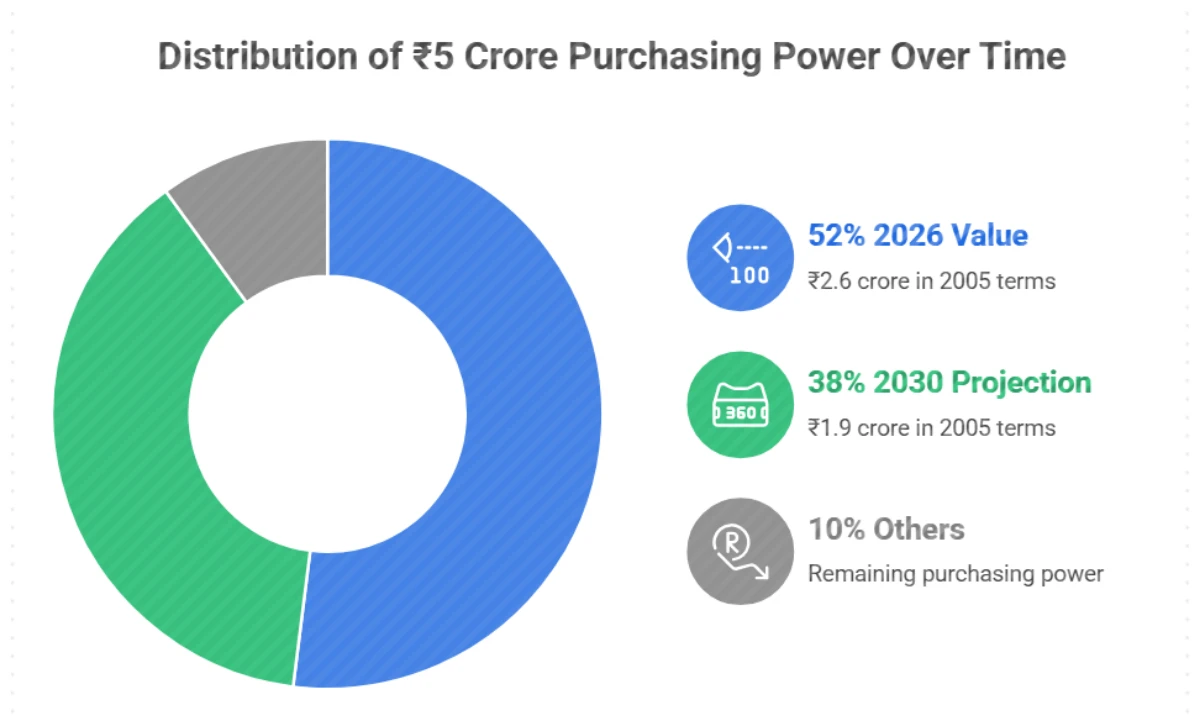
Reality Check: What ₹5 Crore Actually Means in 2026
| Metric | 2026 Value | 2030 Projection |
|---|---|---|
| ₹5 crore purchasing power | ≈ ₹2.6 crore (2005 terms) | ≈ ₹1.9 crore |
| Inflation assumption | 5.8% | 6–6.2% |
| Annual living expense (upper middle class) | ₹15–18 lakh | ₹22–25 lakh |
| Years corpus can last (4% rule) | 27–30 years | 22–24 years |
Insight:
₹5 crore is not “luxury wealth” anymore.
It’s defensive wealth against inflation.
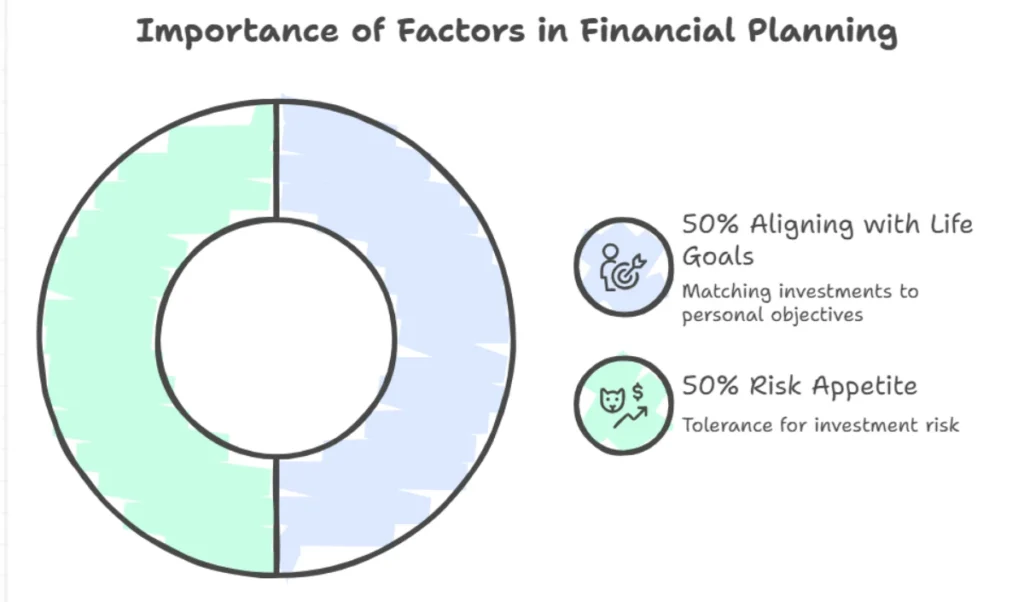
Shweta Jain’s Core Principle: Align Money With Life, Not Markets
Shweta Jain doesn’t start with funds.
She starts with life math.
She asks investors:
- How stable is your income?
- Can you emotionally handle 30–40% drawdowns?
- Do you need money during the 10-year window?
- Is your job cyclical or stable?
Only then does asset allocation begin.
“Returns don’t matter if investors exit at the wrong time.” — Shweta Jain
This single sentence explains 90% of retail failure.
Also Read: Rs 13,000 SIP: The Journey From ₹0 to ₹9 Crore
Risk Appetite vs Risk Capacity (Most Confuse These)
| Factor | Risk Appetite | Risk Capacity |
|---|---|---|
| Definition | Emotional tolerance | Financial ability |
| Influenced by | Personality, fear | Income, age, liabilities |
| Changes with market | Yes | Rarely |
| Determines allocation | ❌ | ✅ |
Expert takeaway:
Portfolios should be built on risk capacity, not confidence during bull markets.
The Math Everyone Avoids: How ₹5 Crore Is Actually Built
Let’s remove motivation.
Let’s bring calculators.
Scenario 1: Aggressive Yet Realistic (High Risk Capacity)
Assumptions:
- Equity-heavy portfolio
- CAGR: 15.5%
- SIP duration: 10 years
| Monthly SIP | Total Invested | Corpus in 10 Years |
|---|---|---|
| ₹1.5 lakh | ₹1.8 crore | ₹4.9–5.2 crore |
| ₹1.25 lakh | ₹1.5 crore | ₹4.2 crore |
| ₹1 lakh | ₹1.2 crore | ₹3.4 crore |
Truth bomb:
₹5 crore needs either time or cash flow.
There is no third option.
Scenario 2: Balanced Investor (Most Professionals)
Assumptions:
- Equity + debt + alternatives
- CAGR: 12.5%
| Monthly SIP | Corpus in 10 Years |
|---|---|
| ₹2 lakh | ₹4.6–4.8 crore |
| ₹1.75 lakh | ₹4.1 crore |
| ₹1.5 lakh | ₹3.5 crore |
This is where goal mismatch frustration begins.
Why Chasing 20% Returns Usually Ends in Zero Discipline
Shweta Jain repeatedly warns against “return porn”.
The problem isn’t low returns.
The problem is return inconsistency + emotional exits.
Data proves this.
| Investor Behavior | Actual Fund CAGR | Investor CAGR |
|---|---|---|
| Disciplined SIP | 14–16% | 13–15% |
| Entry/exit timing | 14–16% | 6–8% |
| Trend chasing | 18% (peak years) | 4–6% |
Markets reward patience, not intelligence.
Asset Allocation Blueprint (2026–2036 Projection)
This is where Shweta Jain’s philosophy shines.
Instead of asking “Which fund?”, she asks:
“Which bucket does this money belong to?”
Also Read: How to Start Investing with Just ₹5,000: Growing Your Wealth
Model Allocation (High Income, Age 30–40)
| Asset Class | Allocation | Expected CAGR |
|---|---|---|
| Equity (India + Global) | 65% | 14–15% |
| Debt | 20% | 6.5–7% |
| Gold/REITs | 10% | 7–9% |
| Cash | 5% | Stability |
Blended CAGR: ~12.8–13.2%
Case Study: Rajiv Didn’t Increase Returns — He Increased Clarity
Rajiv, 34, Bengaluru.
Tech lead. ₹32 lakh CTC.
His mistake?
- 9 mutual funds
- No clear goal
- Panic redemption in 2020
- Re-entered in 2021 peak
After restructuring using goal buckets:
- Retirement bucket (10+ years)
- Medium-term wealth bucket
- Emergency buffer
Result after 3 years:
- Same funds
- Same market
- But behavior changed
| Metric | Before | After |
|---|---|---|
| Annual churn | 28% | <5% |
| SIP consistency | Broken | 100% |
| Stress level | High | Low |
Wealth doesn’t grow faster.
It leaks slower.
The 3 Silent Killers of ₹5 Crore Dreams
1. Lifestyle Inflation
Raises SIP stress.
2. Over-diversification
Creates monitoring fatigue.
3. Ignoring tax efficiency
Reduces real CAGR by 1–2%.
| Leak | Long-Term Impact |
|---|---|
| 1% CAGR loss | –₹75–90 lakh |
| Panic exit once | –2–3 years |
| Poor tax planning | –₹40–60 lakh |
What Shweta Jain Gets Right (And Most Influencers Don’t)
She doesn’t sell:
- “One fund to rule them all”
- “Secret strategy”
- “Guaranteed CAGR”
She sells process discipline.
And process compounds.
FAQ: ₹5 Crore in 10 Years — Honest Answers
Is ₹5 crore realistic for salaried people?
Yes — high-income + disciplined investors, not average savers.
Can I do it with ₹50,000 SIP?
No. Math doesn’t care about motivation.
Should I go 100% equity?
Only if your income and temperament can survive crashes.
What if returns are lower?
Increase duration or SIP. Never force returns.
Final Truth: Wealth Is Built Quietly, Not Virally
₹5 crore won’t come from:
- Viral reels
- Telegram tips
- One lucky fund
It comes from:
- Unsexy SIPs
- Boring asset allocation
- Emotional maturity during crashes
That’s the real message behind Shweta Jain’s math.